
Queensland Building Fire Safety Regulation 2008 | AS 1851-2012 | QDC MP 6.1
If you manage a strata building, sit on a body corporate committee, or oversee a commercial property portfolio in Brisbane, fire protection compliance is one of the most serious legal obligations you carry.
It is not optional, and it is not something you can delegate without oversight. Under Queensland law, failure to maintain fire safety installations in your building can result in on-the-spot fines, prosecution in the Magistrates Court, voided building insurance, and, in serious cases, imprisonment.
This guide explains exactly what the law requires of you in 2026, what compliance looks like in practice, and what to look for when engaging a licensed fire protection contractor in Brisbane.
Fire protection compliance in Queensland operates under a layered legislative framework. As a building manager, body corporate, or property owner, the three key instruments you need to know are:
The Fire and Emergency Services Act 1990 - the overarching legislation governing fire safety obligations in Queensland.
The Building Fire Safety Regulation 2008 (BFSR 2008) - sets out specific obligations for occupiers and owners of buildings with prescribed fire safety installations, including testing frequency, record-keeping requirements, and penalties.
Queensland Development Code MP 6.1 (QDC MP 6.1) - the maintenance code. It details the specific testing intervals and maintenance standards required for each type of fire safety installation, and references Australian Standard AS 1851-2012 as the benchmark for routine servicing.
Queensland Fire Department officers can conduct audits and issue on-the-spot fines to occupiers who do not comply with the maintenance code. Where more serious breaches occur, they can issue Infringement Notices and prosecute in the Magistrates Court.
This is one of the most commonly misunderstood aspects of fire protection in Queensland, particularly in strata and mixed-use settings.
If a building is occupied by a tenant, the tenant must ensure that fire safety installations are maintained.
If a building is occupied by the building owner, the owner is responsible.
If there is no occupier, the building owner must sign the annual occupier's statement.
For strata buildings, the body corporate must establish what fire safety installations are installed within the building and enter into a service contract with an appropriately qualified contractor to have these maintained.
Common areas (stairwells, lobbies, car parks, plant rooms) are the body corporate's responsibility.
Individual lots used as commercial tenancies shift responsibility to the occupier.
Body corporate committees cannot simply instruct a lot owner to handle their own compliance - they must confirm what is and is not covered under the body corporate's service contract.
Body corporate members should determine who is authorised to sign the yearly occupier's statement on behalf of the body corporate and send it to the regional Queensland Fire Department office or email: occupier.statements@qfes.qld.gov.au
Not all fire equipment is classified as a prescribed fire safety installation under Queensland law, but most of what you will find in a strata or commercial building is covered. Bodies corporate must ensure all of the following are tested and maintained annually:
Fire protection systems - sprinklers and stairwell pressurisation systems
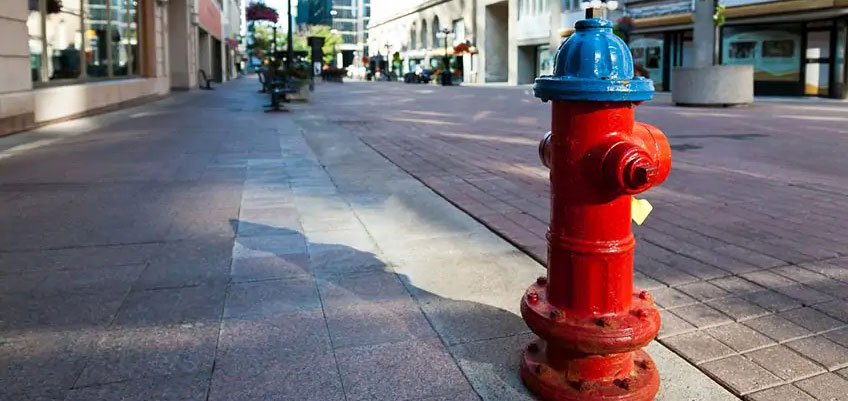
Firefighting equipment - fire extinguishers, hydrants, and hose reels
Occupant safety features - fire signage, emergency lighting, and vehicle access
For commercial property managers, this list typically extends to fire detection and alarm systems, emergency warning intercommunication systems (EWIS), and exit lighting throughout tenancy areas.
4. Annual Testing and Maintenance: The Schedule You Need to Know
One of the most operationally important aspects of fire protection compliance is understanding that it is not a once-a-year event. Queensland legislation requires monthly, quarterly, six-monthly, and annual testing as well as regular equipment replacement.
The table below shows how the AS 1851-2012 maintenance schedule typically applies to Brisbane buildings:
Fire extinguishers must be tested every 6 months under AS 1851. In addition, every extinguisher requires a full pressure test and internal overhaul at the 5-year mark from its manufacture date - this is separate from and in addition to regular 6-monthly servicing.
Strata and body corporate buildings in Brisbane must have all portable fire equipment, extinguishers, hose reels, exit lights, smoke alarms, and fire blankets, inspected every 6 months under AS 1851 and Queensland's Building Fire Safety Regulation 2008. The body corporate or building manager is the responsible entity.
5. The Annual Occupier's Statement: What It Is and When It's Due
The building occupier is responsible for preparing an annual occupier's statement to document that all fire safety installations have been maintained in compliance with QDC MP 6.1. This is enforced under Section 13 of the Building Act 1975 and the Building Fire Safety Regulation 2008.
The occupier's statement is a self-declaration, it confirms that all prescribed fire safety installations in your building have been tested and maintained according to the required standards over the preceding 12 months. It must be:
Signed by the authorised person (owner, occupier, or authorised body corporate representative)
Your fire maintenance contractor is required to produce routine maintenance records, report critical defects, and produce yearly condition reports that meet the requirements of AS 1851-2012 Clauses 1.16 and 1.17 for all fire safety equipment.
Annual Occupier's Statement Vs Annual Fire Safety Statement Know The Difference
These two documents are often confused but serve different purposes:
If you are unsure which applies to your building, confirm with a QBCC-licensed fire protection professional or the Queensland Fire Department directly at fire.qld.gov.au
For some Brisbane buildings, compliance goes beyond routine maintenance. High occupancy buildings are required to appoint and train a Fire Safety Adviser, a person who holds an approved building fire safety qualification issued within the last three years.
Buildings that are required to appoint a Fire Safety Adviser include:
Class 2, 3, 5, 6, 7b, 8, 9a or 9b buildings where 30 or more workers are normally employed
Licensed premises identified by the Queensland Fire Department Commissioner as at risk of overcrowding
To check whether your building meets the threshold, refer to the Queensland Fire Department's 'Overview of Buildings That Must Appoint a Fire Safety Adviser' document, available at fire.qld.gov.au
Under the Fire Services Act 1990 and the Building Fire Safety Regulation 2008, the key fire safety responsibilities for body corporates in Queensland are:
Keeping accurate compliance records (minimum 2 years on-site; 7 years per AS 1851-2012)
For commercial property managers overseeing multi-tenancy buildings, the compliance picture adds complexity around tenant responsibility boundaries, lease clauses, and coordinating multiple service schedules within one building.
Fire safety is the most time-critical compliance area in commercial property management. A refurbishment, extension, or change-of-use application that catches you without up-to-date compliance documentation creates delays, unexpected costs, and legal exposure for your agency and your client. Diarise compliance deadlines at least 90 days in advance.
Non-compliance with Queensland's fire protection legislation carries serious consequences:
Significant financial and imprisonment penalties apply under the Fire and Emergency Services Act 1990 and the Building Fire Safety Regulation 2008.
Insurers that become aware of non-compliance may void the building's insurance coverage, leaving the property and all occupants unprotected.
The QFD is empowered to issue on-the-spot fines, Notices by Commissioner, Infringement Notices, and, in serious cases, prosecute in the Magistrates Court or seek a Supreme Court Injunction.
In practice, enforcement escalates in stages, a Notice by Commissioner, then a Requisition, then an Infringement Notice, but failure to respond at any stage can lead to prosecution.
9. How to Choose a Licensed Fire Protection Contractor in Brisbane
Not all fire protection companies operating in Brisbane hold the right credentials. Before engaging a contractor to service your building, verify the following:
All fire protection work in Queensland must be carried out by appropriately QBCC-licensed individuals. Ask for the contractor's QBCC licence number and verify it at qbcc.qld.gov.au. Different licence classes apply to active fire systems (sprinklers, alarms) versus passive fire systems (fire doors, penetration seals) - confirm the contractor holds the relevant licence for your building type.
Look for contractors who are accredited members of the Fire Protection Association Australia (FPAA) or hold Fire Protection Industry Board (FPIB) certification. This indicates they operate to industry standards beyond the legislative minimum.
Your contractor should provide a full written report after each service visit, document any defects found, and produce a yearly condition report aligned with AS 1851-2012. If a contractor cannot provide clear, audit-ready documentation, they are not set up to support your annual occupier's statement obligations.
Large strata buildings and commercial complexes have different logistical requirements to single-tenancy premises. Ask whether the contractor has experience coordinating access across multiple lots, working with body corporate managers, and producing consolidated compliance reports for the whole building.
Scheduled Reminders And Record Management A professional contractor will track your service schedule and contact you when each service is due, keeping your compliance calendar on autopilot rather than placing the administrative burden on your team. 10. Frequently Asked Questions Is It The Body Corporate Or Individual Lot Owners Who Are Responsible For Fire Protection In A Queensland Strata Building?
Common area fire safety installations are the body corporate's responsibility. Individual lot owners and tenants bear responsibility for installations within their own lot, depending on the terms of their lease or by-laws. The body corporate should establish a service contract with a licensed contractor to cover all common area obligations and confirm in writing what is and is not included.
How Often Must Fire Safety Equipment Be Tested In A Brisbane Strata Or Commercial Building?
Most equipment must be tested at a minimum of every six months under AS 1851-2012. Some systems, particularly sprinklers and fire alarm panels, require additional monthly checks. A full annual condition report is required in addition to all routine servicing.
What Is The Annual Occupier's Statement And When Does It Need To Be Submitted?
It is a self-declaration confirming that all prescribed fire safety installations in your building have been maintained to the required standard over the past 12 months. It must be submitted annually to the Queensland Fire Department. Body corporates must nominate a committee member authorised to sign on the body corporate's behalf.
What Happens If A Body Corporate Committee Refuses To Authorise Fire Protection Work?
To report someone failing to adhere to the regulation, contact the Queensland Fire Department's Community Safety Department. If located in Brisbane, email: QFES.brbao@qfes.qld.gov.au. Non-compliant fire equipment is a serious matter, individual committee members can face personal liability in some circumstances.
Yes! Significantly. Insurers who become aware of non-compliance with Queensland's fire safety regulations may void a building's coverage. This is one of the most serious financial risks associated with delayed or incomplete compliance.
This depends on your building's classification and occupancy levels. Buildings such as commercial offices, retail premises, and high-rise residential buildings with 30 or more workers, or residential buildings over 25 metres in height, are generally required to appoint a trained Fire Safety Adviser. Check the QFD's guidance at fire.qld.gov.au to confirm your building's obligations.
How Do I Verify A Fire Protection Contractor's Licence In Queensland?
Search the contractor's QBCC licence number at qbcc.qld.gov.au. Make sure the licence class covers the specific type of fire protection work required for your building, active fire systems and passive fire systems require different licence classes.
How Long Do We Need To Keep Fire Protection Maintenance Records?
All maintenance documentation must be kept for a minimum of 2 years as set out in Queensland legislation, and 7 years as per AS 1851-2012. Maintaining records well beyond the minimum is recommended to protect the body corporate or building manager in the event of an insurance claim or enforcement action.
Fire protection compliance in Brisbane is not a box-ticking exercise, it is a continuous legal obligation that runs every month of the year. For strata managers, body corporate committees, and commercial property managers, the safest approach is to engage a QBCC-licensed contractor who provides scheduled servicing, audit-ready documentation, and proactive reminders, and to treat compliance deadlines as non-negotiable items in your property management calendar.
If you are unsure where your building stands, a compliance audit from a qualified fire protection specialist is the fastest way to identify gaps before the QFD does.
Queensland Building Fire Safety Regulation 2008 | AS 1851-2012 | QDC MP 6.1
If you manage a strata building, sit on a body corporate committee, or oversee a commercial property portfolio in Brisbane, fire protection compliance is one of the most serious legal obligations you carry.
It is not optional, and it is not something you can delegate without oversight. Under Queensland law, failure to maintain fire safety installations in your building can result in on-the-spot fines, prosecution in the Magistrates Court, voided building insurance, and, in serious cases, imprisonment.
This guide explains exactly what the law requires of you in 2026, what compliance looks like in practice, and what to look for when engaging a licensed fire protection contractor in Brisbane.
Fire protection compliance in Queensland operates under a layered legislative framework. As a building manager, body corporate, or property owner, the three key instruments you need to know are:
The Fire and Emergency Services Act 1990 - the overarching legislation governing fire safety obligations in Queensland.
The Building Fire Safety Regulation 2008 (BFSR 2008) - sets out specific obligations for occupiers and owners of buildings with prescribed fire safety installations, including testing frequency, record-keeping requirements, and penalties.
Queensland Development Code MP 6.1 (QDC MP 6.1) - the maintenance code. It details the specific testing intervals and maintenance standards required for each type of fire safety installation, and references Australian Standard AS 1851-2012 as the benchmark for routine servicing.
Queensland Fire Department officers can conduct audits and issue on-the-spot fines to occupiers who do not comply with the maintenance code. Where more serious breaches occur, they can issue Infringement Notices and prosecute in the Magistrates Court.
This is one of the most commonly misunderstood aspects of fire protection in Queensland, particularly in strata and mixed-use settings.
If a building is occupied by a tenant, the tenant must ensure that fire safety installations are maintained.
If a building is occupied by the building owner, the owner is responsible.
If there is no occupier, the building owner must sign the annual occupier's statement.
For strata buildings, the body corporate must establish what fire safety installations are installed within the building and enter into a service contract with an appropriately qualified contractor to have these maintained.
Common areas (stairwells, lobbies, car parks, plant rooms) are the body corporate's responsibility.
Individual lots used as commercial tenancies shift responsibility to the occupier.
Body corporate committees cannot simply instruct a lot owner to handle their own compliance - they must confirm what is and is not covered under the body corporate's service contract.
Body corporate members should determine who is authorised to sign the yearly occupier's statement on behalf of the body corporate and send it to the regional Queensland Fire Department office or email: occupier.statements@qfes.qld.gov.au
Not all fire equipment is classified as a prescribed fire safety installation under Queensland law, but most of what you will find in a strata or commercial building is covered. Bodies corporate must ensure all of the following are tested and maintained annually:
Fire protection systems - sprinklers and stairwell pressurisation systems
Firefighting equipment - fire extinguishers, hydrants, and hose reels
Occupant safety features - fire signage, emergency lighting, and vehicle access
For commercial property managers, this list typically extends to fire detection and alarm systems, emergency warning intercommunication systems (EWIS), and exit lighting throughout tenancy areas.
4. Annual Testing and Maintenance: The Schedule You Need to Know
One of the most operationally important aspects of fire protection compliance is understanding that it is not a once-a-year event. Queensland legislation requires monthly, quarterly, six-monthly, and annual testing as well as regular equipment replacement.
The table below shows how the AS 1851-2012 maintenance schedule typically applies to Brisbane buildings:
Fire extinguishers must be tested every 6 months under AS 1851. In addition, every extinguisher requires a full pressure test and internal overhaul at the 5-year mark from its manufacture date - this is separate from and in addition to regular 6-monthly servicing.
Strata and body corporate buildings in Brisbane must have all portable fire equipment, extinguishers, hose reels, exit lights, smoke alarms, and fire blankets, inspected every 6 months under AS 1851 and Queensland's Building Fire Safety Regulation 2008. The body corporate or building manager is the responsible entity.
5. The Annual Occupier's Statement: What It Is and When It's Due
The building occupier is responsible for preparing an annual occupier's statement to document that all fire safety installations have been maintained in compliance with QDC MP 6.1. This is enforced under Section 13 of the Building Act 1975 and the Building Fire Safety Regulation 2008.
The occupier's statement is a self-declaration, it confirms that all prescribed fire safety installations in your building have been tested and maintained according to the required standards over the preceding 12 months. It must be:
Signed by the authorised person (owner, occupier, or authorised body corporate representative)
Your fire maintenance contractor is required to produce routine maintenance records, report critical defects, and produce yearly condition reports that meet the requirements of AS 1851-2012 Clauses 1.16 and 1.17 for all fire safety equipment.
Annual Occupier's Statement Vs Annual Fire Safety Statement Know The Difference
These two documents are often confused but serve different purposes:
If you are unsure which applies to your building, confirm with a QBCC-licensed fire protection professional or the Queensland Fire Department directly at fire.qld.gov.au
For some Brisbane buildings, compliance goes beyond routine maintenance. High occupancy buildings are required to appoint and train a Fire Safety Adviser, a person who holds an approved building fire safety qualification issued within the last three years.
Buildings that are required to appoint a Fire Safety Adviser include:
Class 2, 3, 5, 6, 7b, 8, 9a or 9b buildings where 30 or more workers are normally employed
Licensed premises identified by the Queensland Fire Department Commissioner as at risk of overcrowding
To check whether your building meets the threshold, refer to the Queensland Fire Department's 'Overview of Buildings That Must Appoint a Fire Safety Adviser' document, available at fire.qld.gov.au
Under the Fire Services Act 1990 and the Building Fire Safety Regulation 2008, the key fire safety responsibilities for body corporates in Queensland are:
Keeping accurate compliance records (minimum 2 years on-site; 7 years per AS 1851-2012)
For commercial property managers overseeing multi-tenancy buildings, the compliance picture adds complexity around tenant responsibility boundaries, lease clauses, and coordinating multiple service schedules within one building.
Fire safety is the most time-critical compliance area in commercial property management. A refurbishment, extension, or change-of-use application that catches you without up-to-date compliance documentation creates delays, unexpected costs, and legal exposure for your agency and your client. Diarise compliance deadlines at least 90 days in advance.
Non-compliance with Queensland's fire protection legislation carries serious consequences:
Significant financial and imprisonment penalties apply under the Fire and Emergency Services Act 1990 and the Building Fire Safety Regulation 2008.
Insurers that become aware of non-compliance may void the building's insurance coverage, leaving the property and all occupants unprotected.
The QFD is empowered to issue on-the-spot fines, Notices by Commissioner, Infringement Notices, and, in serious cases, prosecute in the Magistrates Court or seek a Supreme Court Injunction.
In practice, enforcement escalates in stages, a Notice by Commissioner, then a Requisition, then an Infringement Notice, but failure to respond at any stage can lead to prosecution.
9. How to Choose a Licensed Fire Protection Contractor in Brisbane
Not all fire protection companies operating in Brisbane hold the right credentials. Before engaging a contractor to service your building, verify the following:
All fire protection work in Queensland must be carried out by appropriately QBCC-licensed individuals. Ask for the contractor's QBCC licence number and verify it at qbcc.qld.gov.au. Different licence classes apply to active fire systems (sprinklers, alarms) versus passive fire systems (fire doors, penetration seals) - confirm the contractor holds the relevant licence for your building type.
Look for contractors who are accredited members of the Fire Protection Association Australia (FPAA) or hold Fire Protection Industry Board (FPIB) certification. This indicates they operate to industry standards beyond the legislative minimum.
Your contractor should provide a full written report after each service visit, document any defects found, and produce a yearly condition report aligned with AS 1851-2012. If a contractor cannot provide clear, audit-ready documentation, they are not set up to support your annual occupier's statement obligations.
Large strata buildings and commercial complexes have different logistical requirements to single-tenancy premises. Ask whether the contractor has experience coordinating access across multiple lots, working with body corporate managers, and producing consolidated compliance reports for the whole building.
Scheduled Reminders And Record Management A professional contractor will track your service schedule and contact you when each service is due, keeping your compliance calendar on autopilot rather than placing the administrative burden on your team. 10. Frequently Asked Questions Is It The Body Corporate Or Individual Lot Owners Who Are Responsible For Fire Protection In A Queensland Strata Building?
Common area fire safety installations are the body corporate's responsibility. Individual lot owners and tenants bear responsibility for installations within their own lot, depending on the terms of their lease or by-laws. The body corporate should establish a service contract with a licensed contractor to cover all common area obligations and confirm in writing what is and is not included.
How Often Must Fire Safety Equipment Be Tested In A Brisbane Strata Or Commercial Building?
Most equipment must be tested at a minimum of every six months under AS 1851-2012. Some systems, particularly sprinklers and fire alarm panels, require additional monthly checks. A full annual condition report is required in addition to all routine servicing.
What Is The Annual Occupier's Statement And When Does It Need To Be Submitted?
It is a self-declaration confirming that all prescribed fire safety installations in your building have been maintained to the required standard over the past 12 months. It must be submitted annually to the Queensland Fire Department. Body corporates must nominate a committee member authorised to sign on the body corporate's behalf.
What Happens If A Body Corporate Committee Refuses To Authorise Fire Protection Work?
To report someone failing to adhere to the regulation, contact the Queensland Fire Department's Community Safety Department. If located in Brisbane, email: QFES.brbao@qfes.qld.gov.au. Non-compliant fire equipment is a serious matter, individual committee members can face personal liability in some circumstances.
Yes! Significantly. Insurers who become aware of non-compliance with Queensland's fire safety regulations may void a building's coverage. This is one of the most serious financial risks associated with delayed or incomplete compliance.
This depends on your building's classification and occupancy levels. Buildings such as commercial offices, retail premises, and high-rise residential buildings with 30 or more workers, or residential buildings over 25 metres in height, are generally required to appoint a trained Fire Safety Adviser. Check the QFD's guidance at fire.qld.gov.au to confirm your building's obligations.
How Do I Verify A Fire Protection Contractor's Licence In Queensland?
Search the contractor's QBCC licence number at qbcc.qld.gov.au. Make sure the licence class covers the specific type of fire protection work required for your building, active fire systems and passive fire systems require different licence classes.
How Long Do We Need To Keep Fire Protection Maintenance Records?
All maintenance documentation must be kept for a minimum of 2 years as set out in Queensland legislation, and 7 years as per AS 1851-2012. Maintaining records well beyond the minimum is recommended to protect the body corporate or building manager in the event of an insurance claim or enforcement action.
Fire protection compliance in Brisbane is not a box-ticking exercise, it is a continuous legal obligation that runs every month of the year. For strata managers, body corporate committees, and commercial property managers, the safest approach is to engage a QBCC-licensed contractor who provides scheduled servicing, audit-ready documentation, and proactive reminders, and to treat compliance deadlines as non-negotiable items in your property management calendar.
If you are unsure where your building stands, a compliance audit from a qualified fire protection specialist is the fastest way to identify gaps before the QFD does.
Search Search for: Recent Posts BLOG, UNCATEGORIZEDMay 23, 2025 Top 7 Fire Hazards Found in Commercial Buildings (and How to Prevent Them) BLOG, UNCATEGORIZEDMarch 14, 2025 Is Your Smoke Alarm Loud Enough to Save Lives?
Safety And Fire Experts Pty Ltd ABN: 46 627 958 623 QBCC Contractors Licence No: 15156086 Electrical Contractors Licence No: 87456
1300 50 7233 Links Home News About Contact Get In Touch Facebook