
Emergency LiGHTING What Are The Four Categories Of Emergency Lighting? Standby/Emergency Lighting Illuminated Emergency Exit Signs & Lighting Importance Of Emergency & Exit Lighting
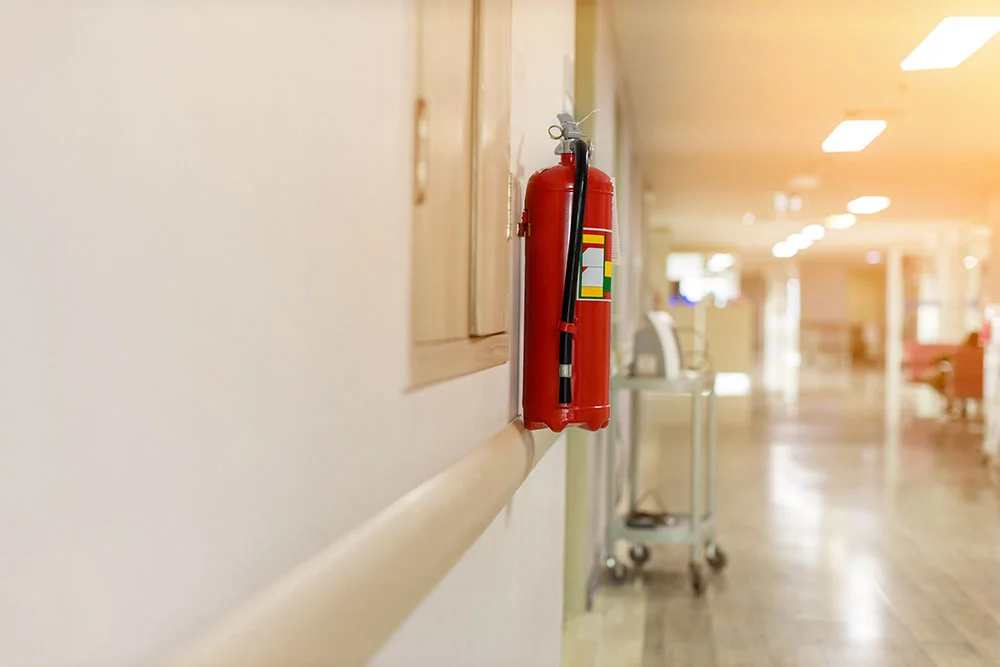
Emergency lighting is important to assist occupants to exit the building in an emergency situation, this occurs by backup batteries in the lights providing a level of illumination in the egress path that allows the occupants of the building to safely exit in the event of a mains power failure.
Emergency Exit lighting is another aspect of safety, these light fittings also include backup batteries, which provide a level of illumination at the final exit point of an area, floor or building to allow the occupants to be decisive in the most suitable and safest points of escape from a building. The Building Code of Australia and AS2293.1 are the foundation of what Exit and Emergency lighting is required in a building and the locations in that it should be installed. Generally, the following locations as
Stairways Passageways Adjacent switchboards General Circulation Spaces
This allows for safe access and exit from the area if there is a loss of power and there is not enough natural lighting.
AS 2293.1 allows for an internally illuminated exit sign to perform roles of illuminated emergency exit signage and emergency escape luminaire if it meets the requirements of both purposes as set out in the applicable Australian Standards and allowances of the Building Code of Australia (BCA).
The inspection and maintenance procedures of Exit and/or Emergency lighting are detailed in AS/NZS 2293 Part 2, and the process involves:
Confirmation that there's been no power loss to the system within 16-hour prior to routine maintenance occurring. Ensuring all Exit & Emergency lighting is operational under mains power prior to routine maintenance. Identification of any maintained or non-maintained lighting and verification of their functionality. Testing of battery backup (90-minute discharge test). Cleaning of fittings to ensure they are emitting the required light levels (Lux). Verifying that the installed lighting system is fit for purpose. Ensuring that exit and emergency lights have returned to normal operation upon completion of the testing. Contact Us for a FREE Quote How Often Should Emergency Lighting Be Tested?
Inspections and testing are required on a 6 Monthly &; Annual basis, a 90-minute light discharge must be carried out on dedicated Exit and Emergency Lighting, this testing is called Routine Maintenance and is required as per AS 2293.2 and state specific legislation.
Emergency lighting should operate for a minimum of 90 minutes when discharged, and extended to 120 minutes when batteries are replaced.
A manually tested systems are Emergency and/or Exit lights wired to a test timer/switch. This is the most cost-effective method of conducting inspections and provides the most accurate results.
Although self-testing Exit and/or Emergency lights that include an in-built timer that puts them into duration test mode every 6 months are sold as the best cost saving product, this is generally not the situation, this is due to the fittings still requiring a clean and visual inspection by a technician. Centrally monitored systems are also sold as a cost saving exercise. However, based on experience, we find these systems to be unreliable and very costly to purchase initially and for any ongoing repairs.
Contact Us for a FREE Quote Need to consult an expert for your buildings Fire Protection? Trust SAFE the number one Fire Safety company in South East Queensland. Contact Us
Safety And Fire Experts Pty Ltd ABN: 46 627 958 623 QBCC Contractors Licence No: 15156086 Electrical Contractors Licence No: 87456
1300 50 7233 Links Home News About Contact Get In Touch Facebook Linkedin